CASE STUDY
Uber Medical
Eliminating transportation barriers to healthcare appointments through a patient-controlled B2C solution.
Company
Personal Case Study
Role
Product Designer
UX Researcher
Team
1 Designer
Timeline
2 weeks
Nov-Feb 2026
THE CONTEXT
The Healthcare Transportation Crisis
3.6 million
Americans miss appointments yearly due to transportation barriers.
25%
of missed appointments = lack of transportation.
$150B
Total annual cost to U.S. healthcare system.
This pointed towards a massive, growing need for reliable medical transportation.
THE OPPORTUNITY
Where Uber Fits In
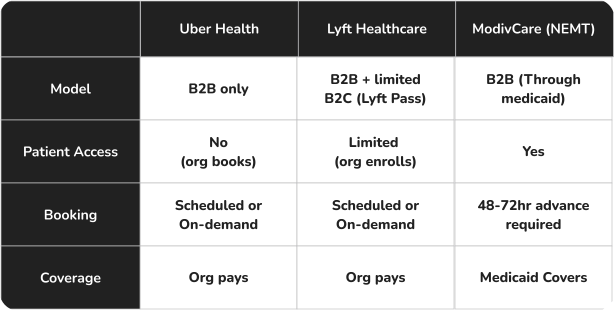
Uber operates the largest rideshare network with over 180 million global users. They already have two solutions in this space:
The Gap? No patient self-service medical solution
UNDERSTANDING USERS
User Research Process
01
Preliminary Reddit Analysis
I analyzed popular rideshare subreddits such as r/uber and r/NEMT to help me understand natural user pain points in medical transportation.
02
22 Survey Respondents
I conducted a survey completed by 22 people to validate the problem and understand user feelings.
03
4 User Interviews
I conducted 4 interviews with users who have used rideshare for medical appointments to identify the process and patient needs.
Key Results & Insights
30%
Currently use or have used rideshare for medical appointments
This proves that there is a demand for a patient-facing feature within rideshare platforms.
64%
Have been late due to transportation issues
Major lack of standardization in healthcare industry causes confusion and inefficiencies for patients and healthcare providers.
51%
of those late couldn't find the location or entrance
This told me location precision is a core problem that needed solving.
COMPETITIVE ANALYSIS
Identifying Market Gaps in the Competitive Landscape
After conducting a competitive analysis, I identified a similar gap to my initial discovery within Uber's ecosystem.
-> No direct patient self-service B2C models
Rides managed by third-party organizations
No precise entrance data
Manual timing calculation required
AFFINITY MAPPING
Synthesizing Insights into Key Themes
Location Confusion
Patients often can't find correct entrance at large facilities: the primarily reason for delays
GPS drops at main address, not specific department.
Planning Friction
Manual timing calculation → anxiety & stress. Not sure when or where to go.
48-72 hour advance notice required for patient-access NEMT services
Access & Communication
B2B models = no self-service.
Frequent driver cancellations with 3rd party rides, no direct communication with user.
USER PERSONA
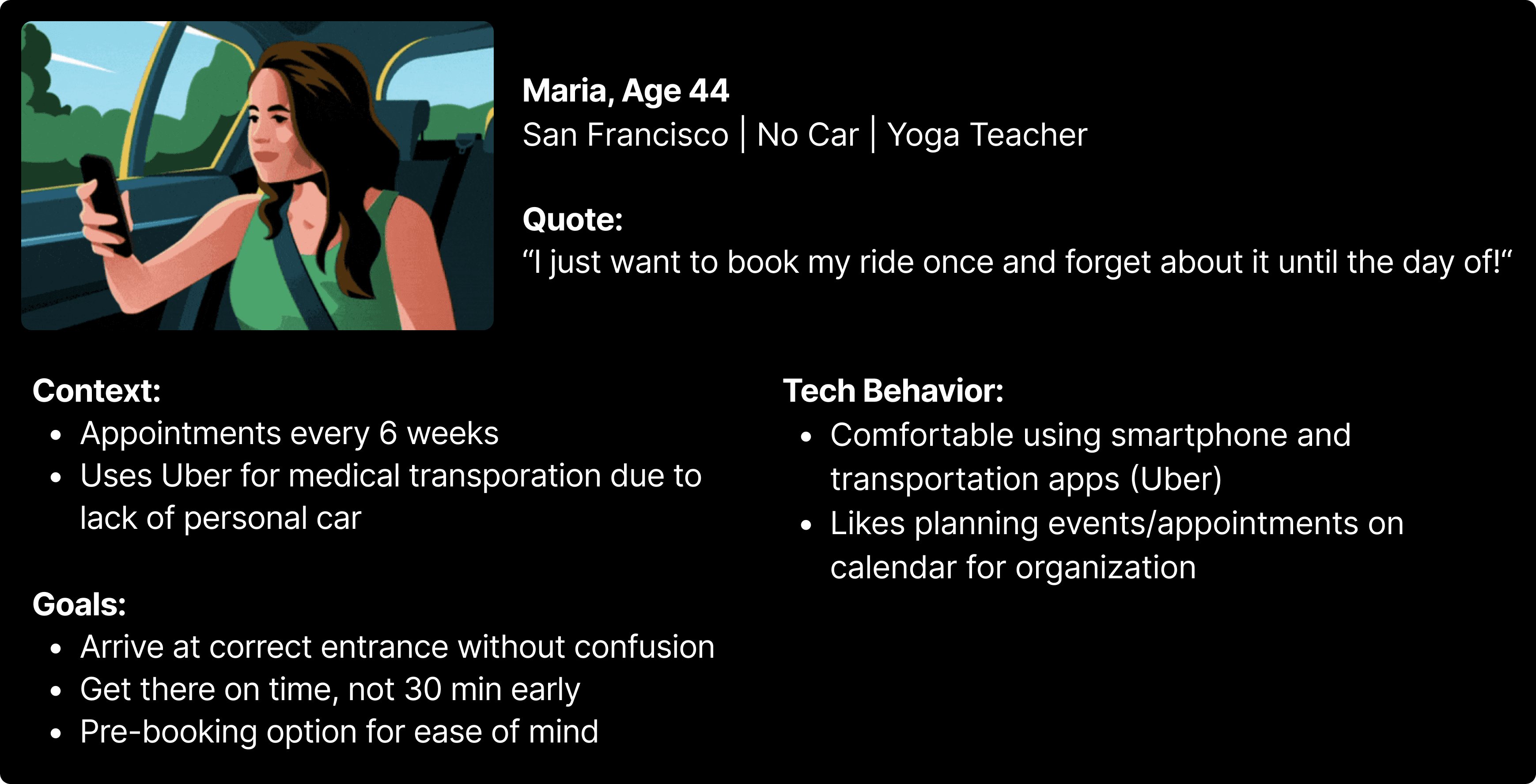
Introducing Maria
I created a persona to ground each design decision in research and help clarify the target audience I was designing for.
PROBLEM STATEMENT
How might we integrate medical appointment logistics with transportation so patients can book at their own convenience and arrive without stress?
IDEATION
Low-Fidelity Wireframes

Next, I brainstormed feature ideas, and created the core flows through low-fidelity wireframes.
Onboarding: Landing → Choose Facility → Choose Department → Success → Home
Booking: Home → Choose Timing → Enter Details → Confirm Vehicle → Confirm Pickup → Booked
USABILITY TESTING
Design Iterations & Pivots
I conducted two rounds of usability testing to validate my design concepts. Based on the results, I made three key iterations.
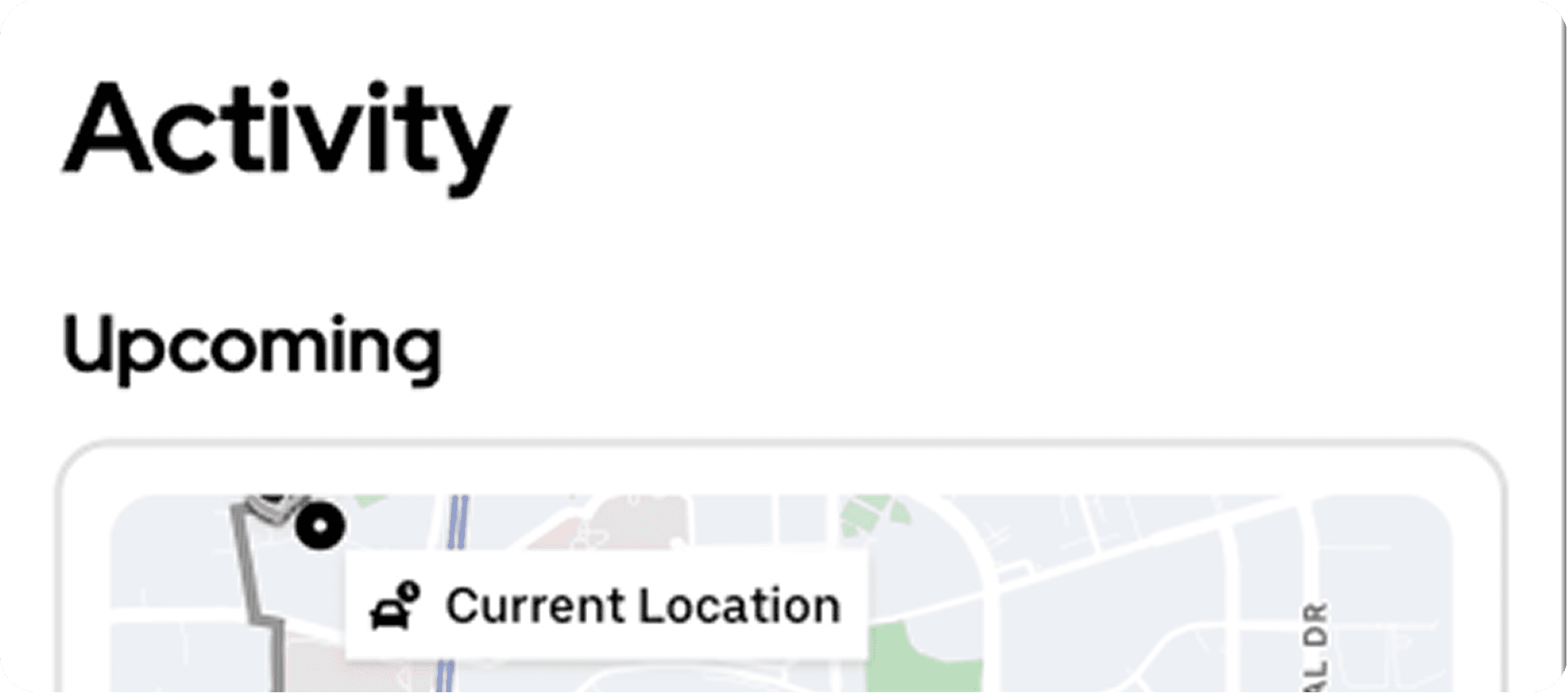
Upcoming Rides → Activities
Users expected to find booked medical rides in the familiar Activity tab, not the Medical Rides page.
I moved booked rides to Activity to align with existing Uber patterns.
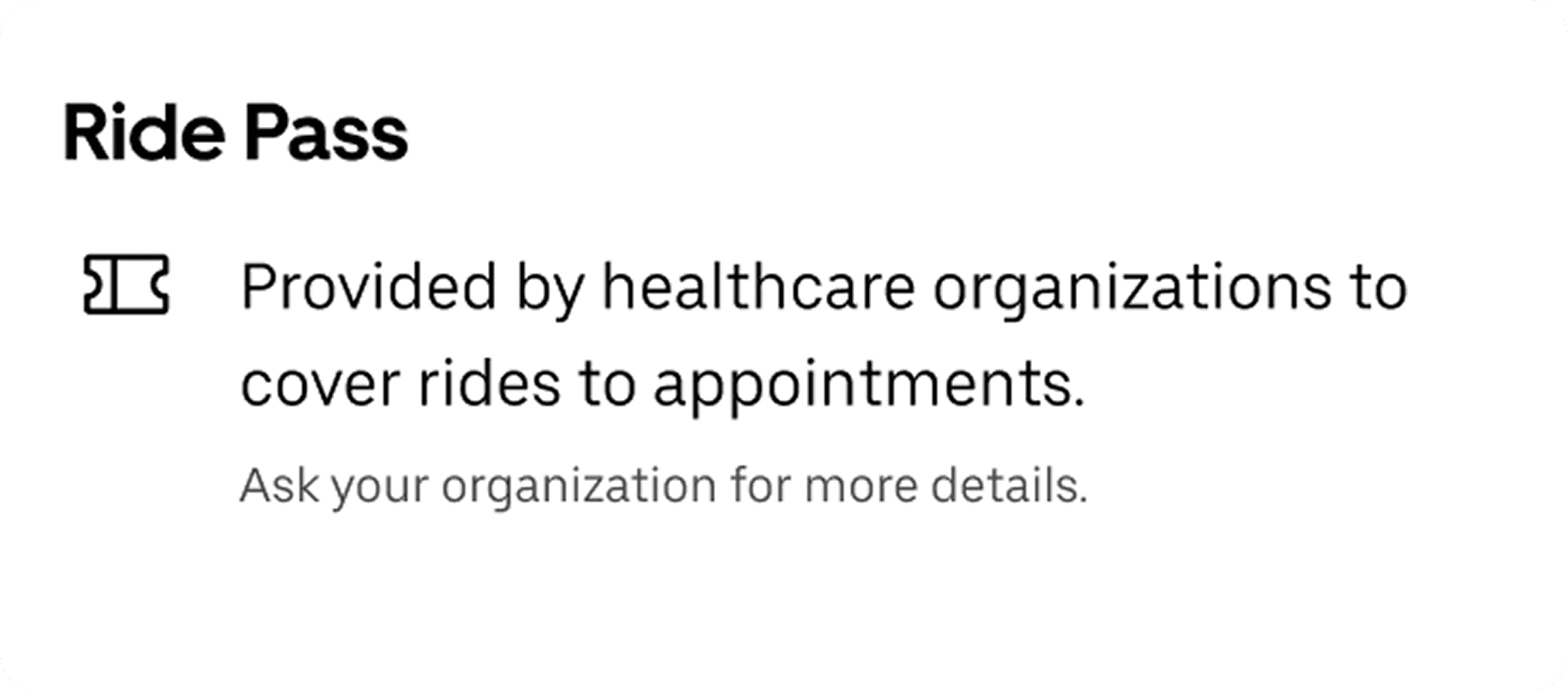
Medical Pass Feature
Users asked if insurance or organizational coverage would work.
I added Ride Pass to allow healthcare orgs to cover rides as an alternative to traditional third-party insurance.
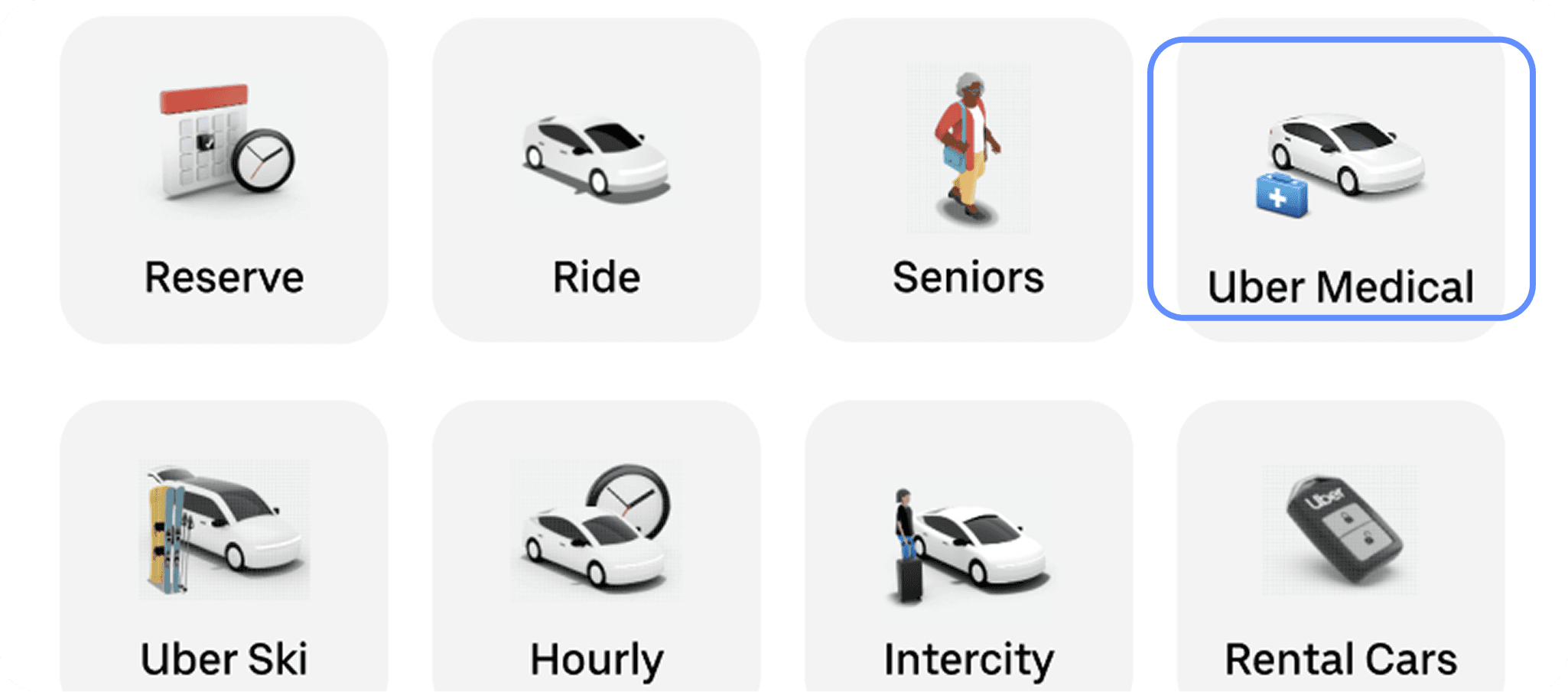
Flow Clarity
Users were confused about where to start.
Added home page designation within flow to provide a clear entry point into the medical rides experience.
FINAL SOLUTION
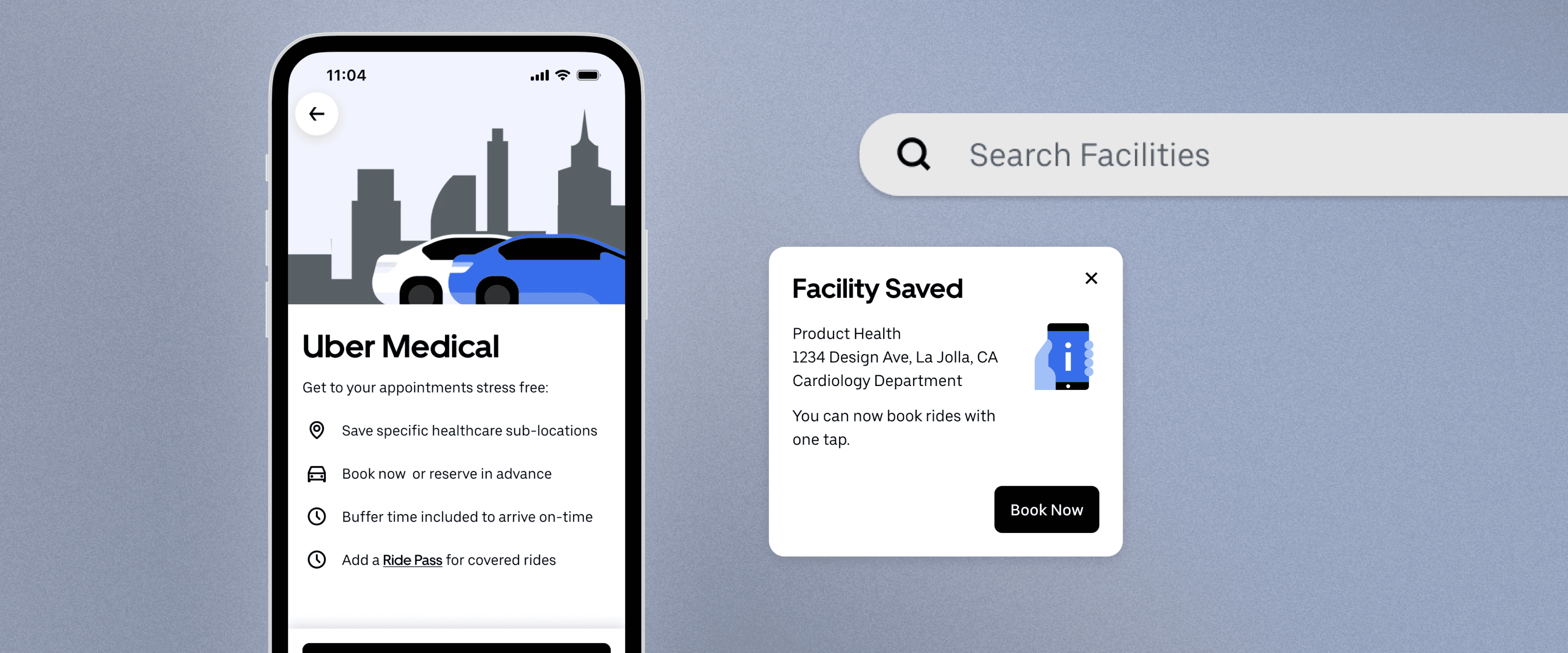
Introducing Uber Medical Rides

Uber Medical is accessed through the home Services page.
First-time users are onboarded by saving their facility information for one-tap booking.
Users can redeem a Ride Pass provided by their healthcare organization via PIN code for covered fees on eligible rides.
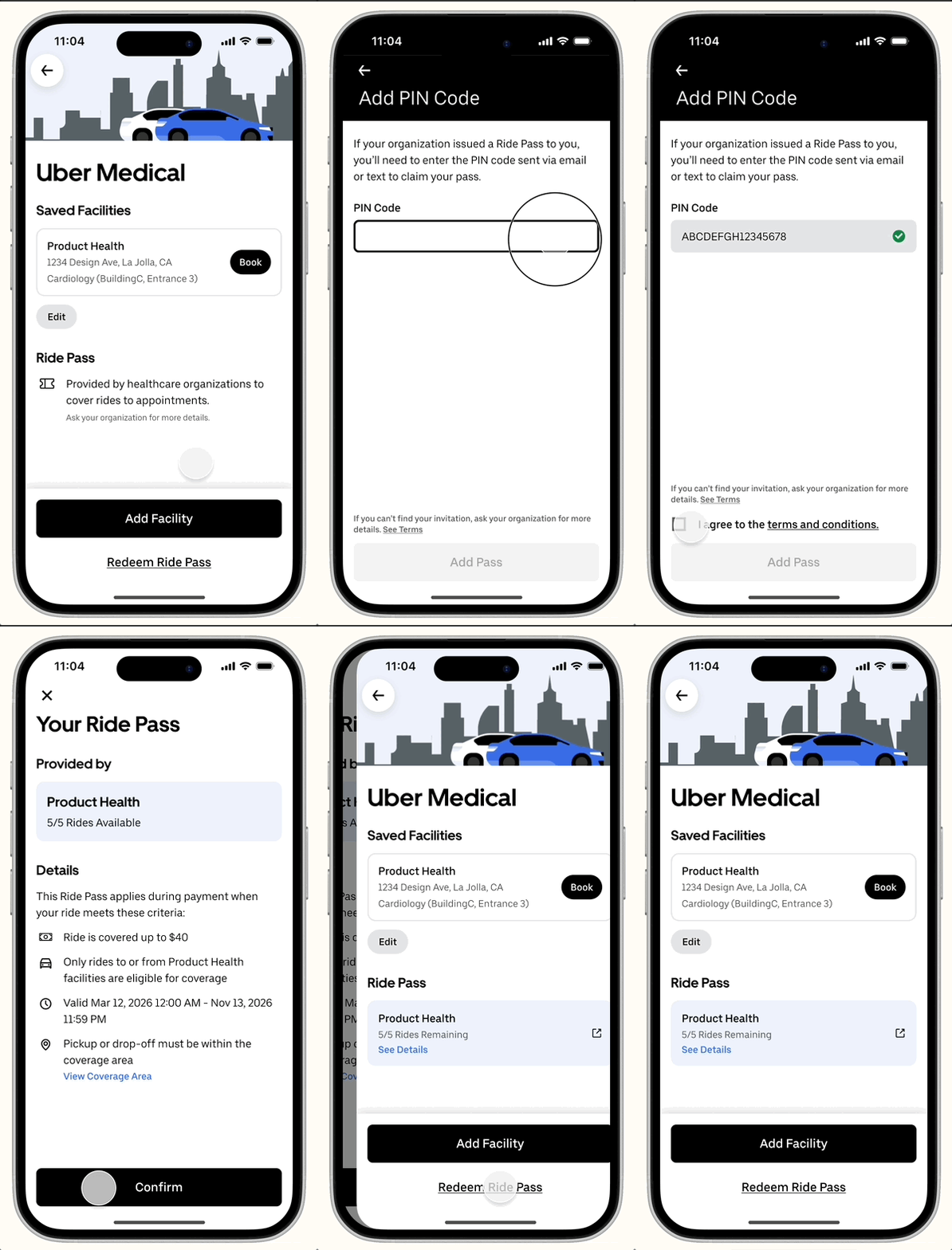
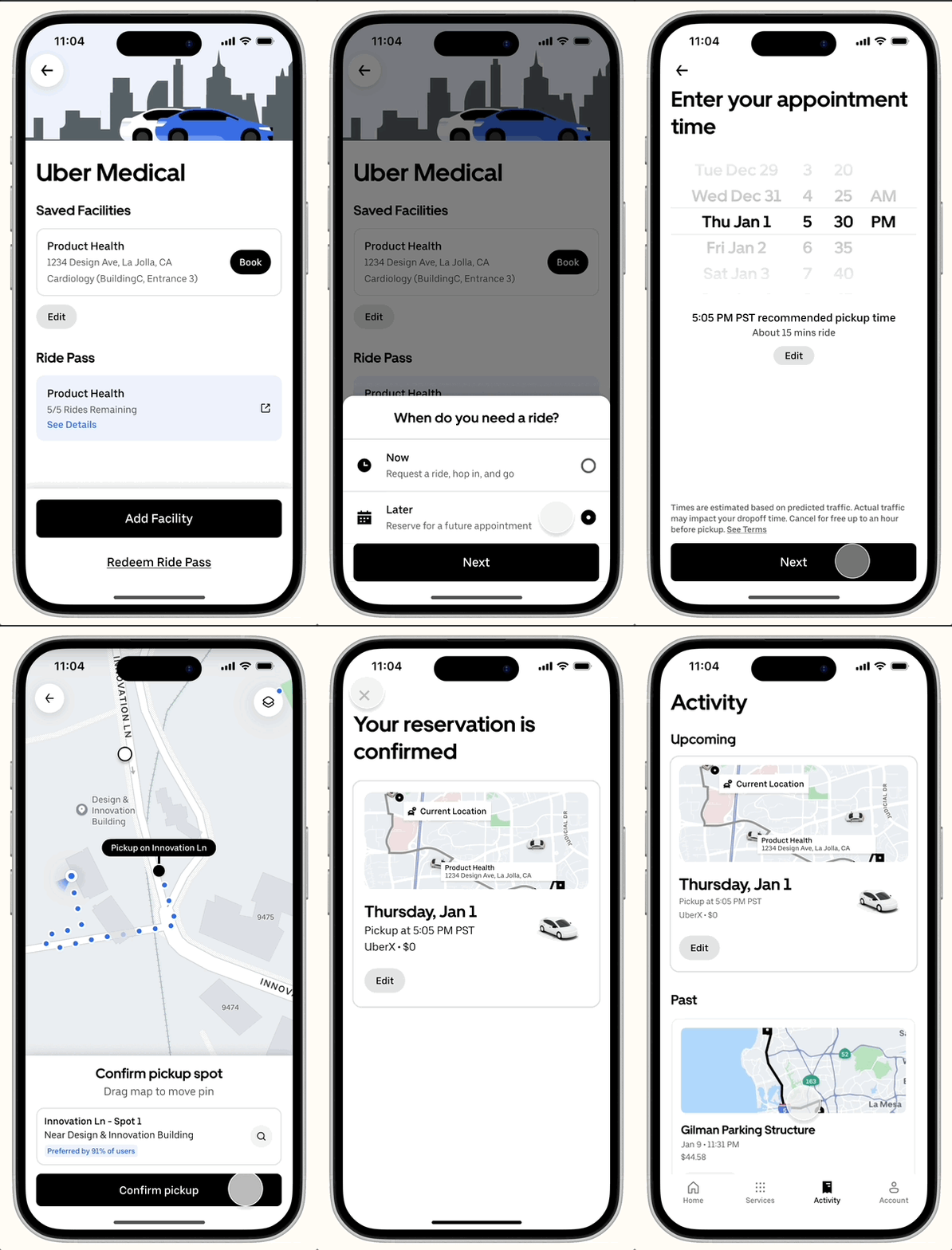
By saving a facility, one-tap booking allows users to easily book on-demand or scheduled rides.
Active Ride Passes will be automatically applied to eligible rides during payment.
NEXT STEPS
If I had more time…
Continue Iterating -> Conduct usability testing to validate the hi-fi designs with real target users.
Explore calendar-sync from upcoming appointments to help users manage rides
Explore potential insurance compatibility with the self-service Uber Medical feature
REFLECTIONS
Lead with Market Gap
Identifying what competitors don’t offer before solutions shaped a differentiated product
Constraints = Creativity
Working within constraints drove creative solutions
Test to Clarify Confusion
Importance of usability testing to identify points of confusion