CASE STUDY
Kohabit
Honest agreements, calmer homes.
Overview
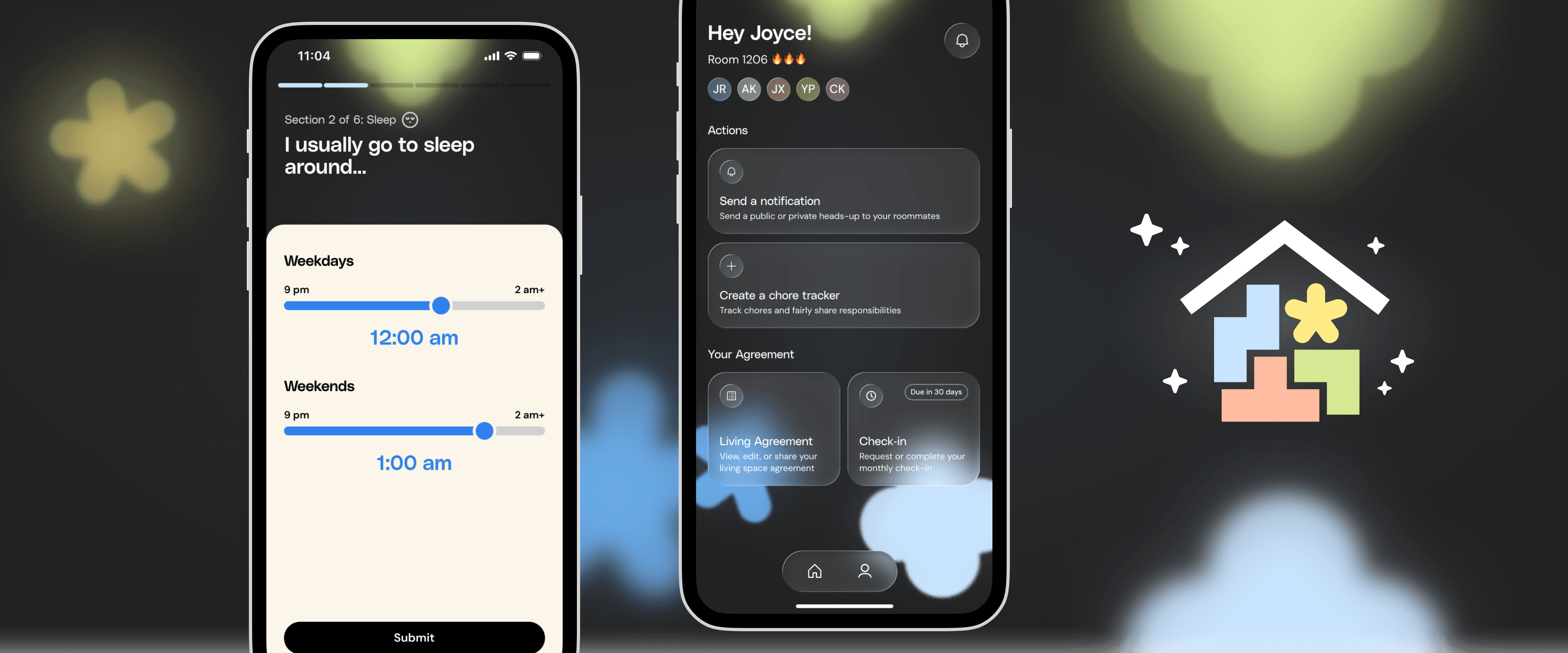
Kohabit is a collaborative roommate agreement tool that helps college students set honest expectations before conflict starts. Built for university housing, it replaces broken, static processes with a living agreement hub that roommates can revisit throughout the year.
Role
Product Designer
Team
1 Designer
1 Marketer
1 Product Manager
Timeline
Spring 2026
8 weeks
Tools
Figma, Claude Code, Vercel, Cursor
THE CONTEXT
1 in 3 college students report having roommate problems each year.
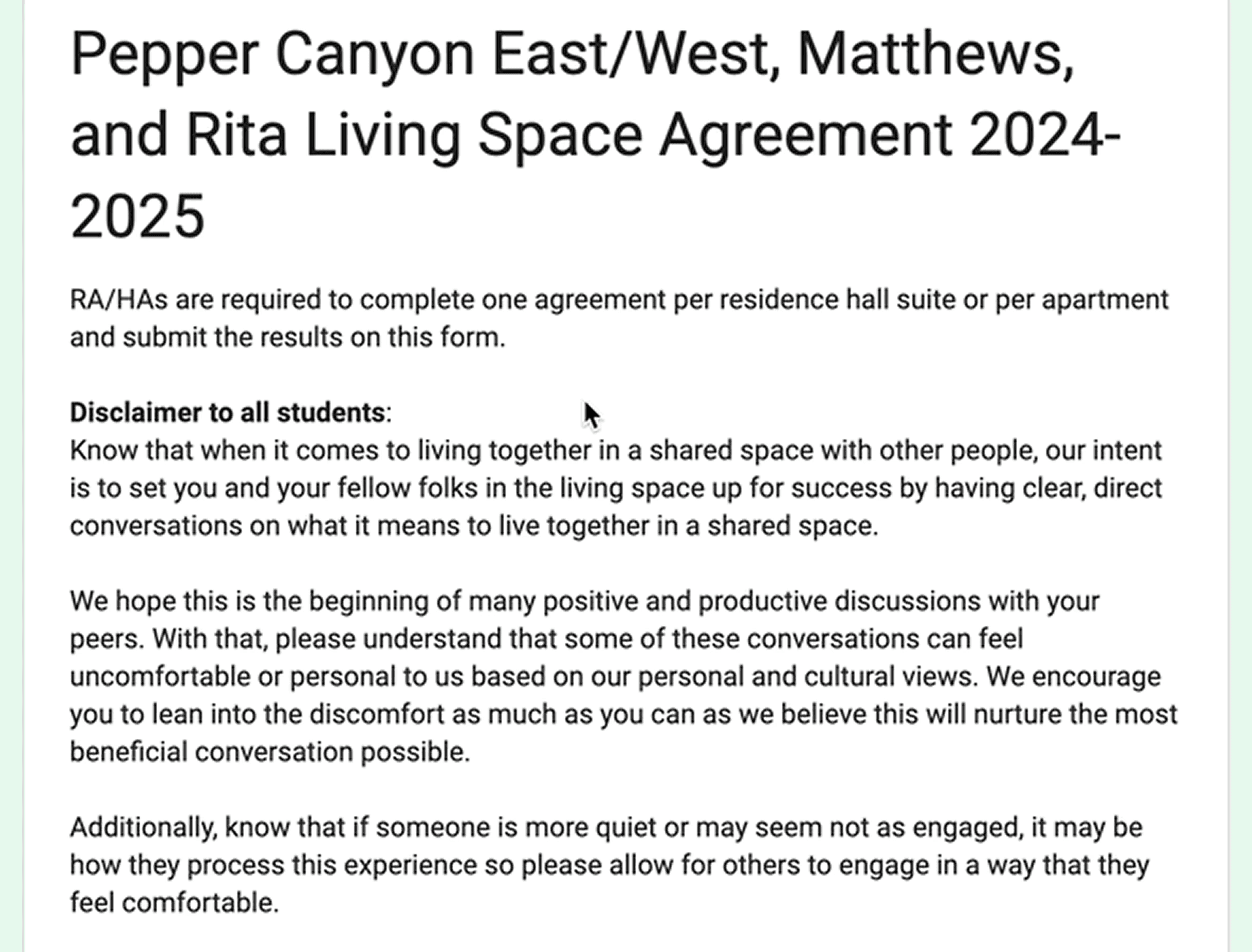
To help prevent roommate conflicts, universities respond with Roommate/Living Space Agreements: discussion-based roommate contracts mandated at move-in. They're well-intentioned, widely required, but largely ignored.
Living Space Agreement (LSA)
(ˈlɪvɪŋ speɪs əˈɡriːmənt)
A document roommates fill out together at the start of the year that outlines shared expectations for how they'll live together, functioning as a discussion-based agreement.
The Truth: A roommate solution that works well in practice, but is quickly forgotten.
THE PROBLEM
Living space agreements are failing the students they’re meant to protect
Created under social pressure, not honesty
Static document vs. dynamic, changing living
No safe way to surface tension early
The Opportunity: While roommate agreements are required at most universities, the process hasn't changed in decades.
UNDERSTANDING OUR USERS
User Research Process
01
8 In-Depth Interviews
with college students in/previously in university housing
02
21 Survey Respondents
on roommate conflict, LSAs, and daily living patterns
03
Competitive Analysis
analyzed 4 competitor segments across the market
Goal: understand why LSAs don’t prevent conflict and what students actually need
Key Findings & Insights
01
Roommate tension often came from small, repeated behaviors (cleanliness, chores, noise).
“One roommate kept leaving our toilet dirty…didn’t bring it up ’cause it was awkward to talk about.”
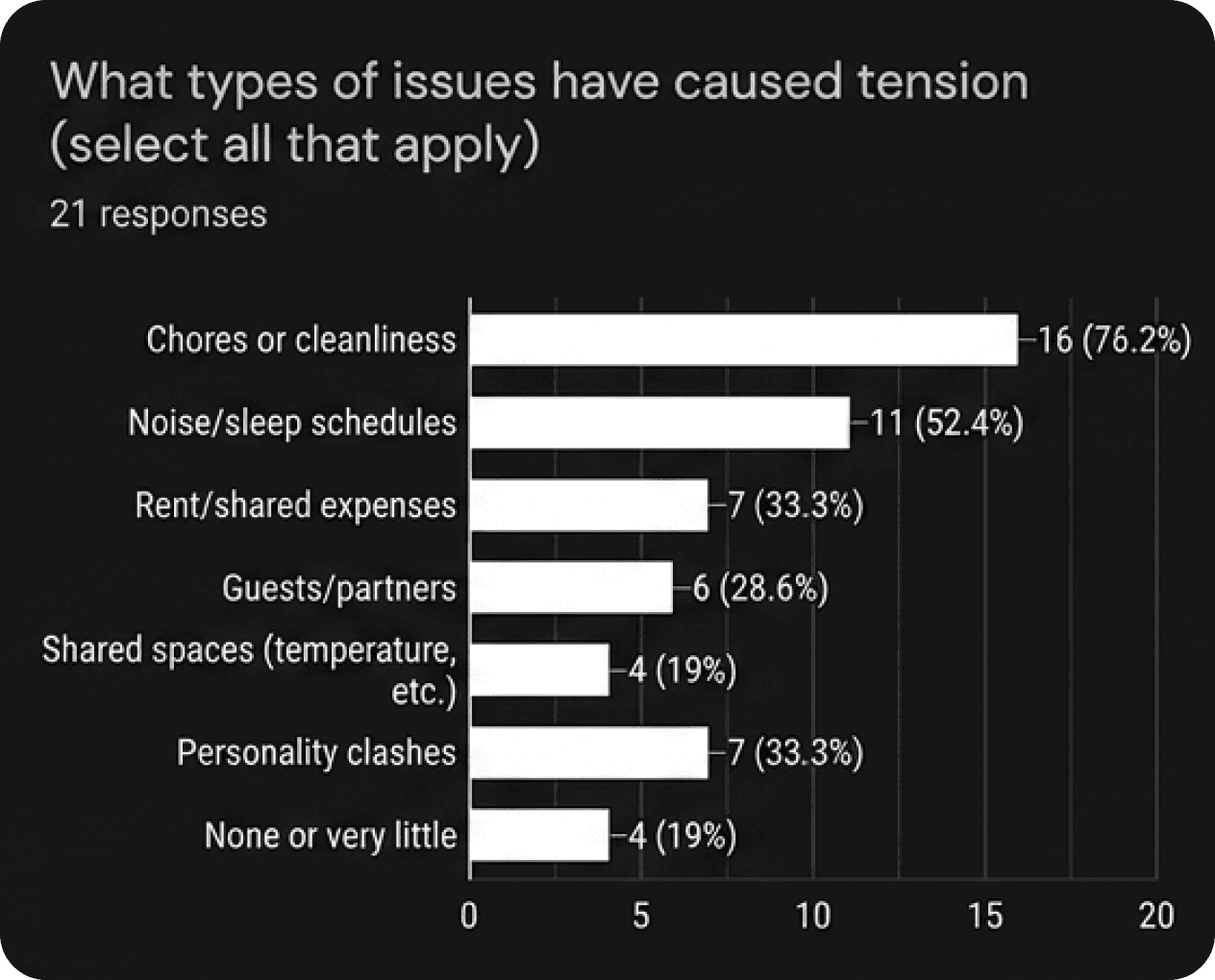
Most roommate conflicts are slow‑burn: small issues, unspoken boundaries, and no comfortable way to talk about it.
02
Majority of participants felt uncomfortable being fully honest during the living agreement creation process, and couldn’t recall its contents a month later.
“Even though RA's tell us it might be a good idea to revisit it throughout the year, it does not come up again since its hard to bring up in conversation.”
“It was a requirement made by our RA. After it was made, it was honestly forgotten about.”
LSAs are treated as a box to tick for housing, not a real tool roommates trust or use.
THE MARKET GAP
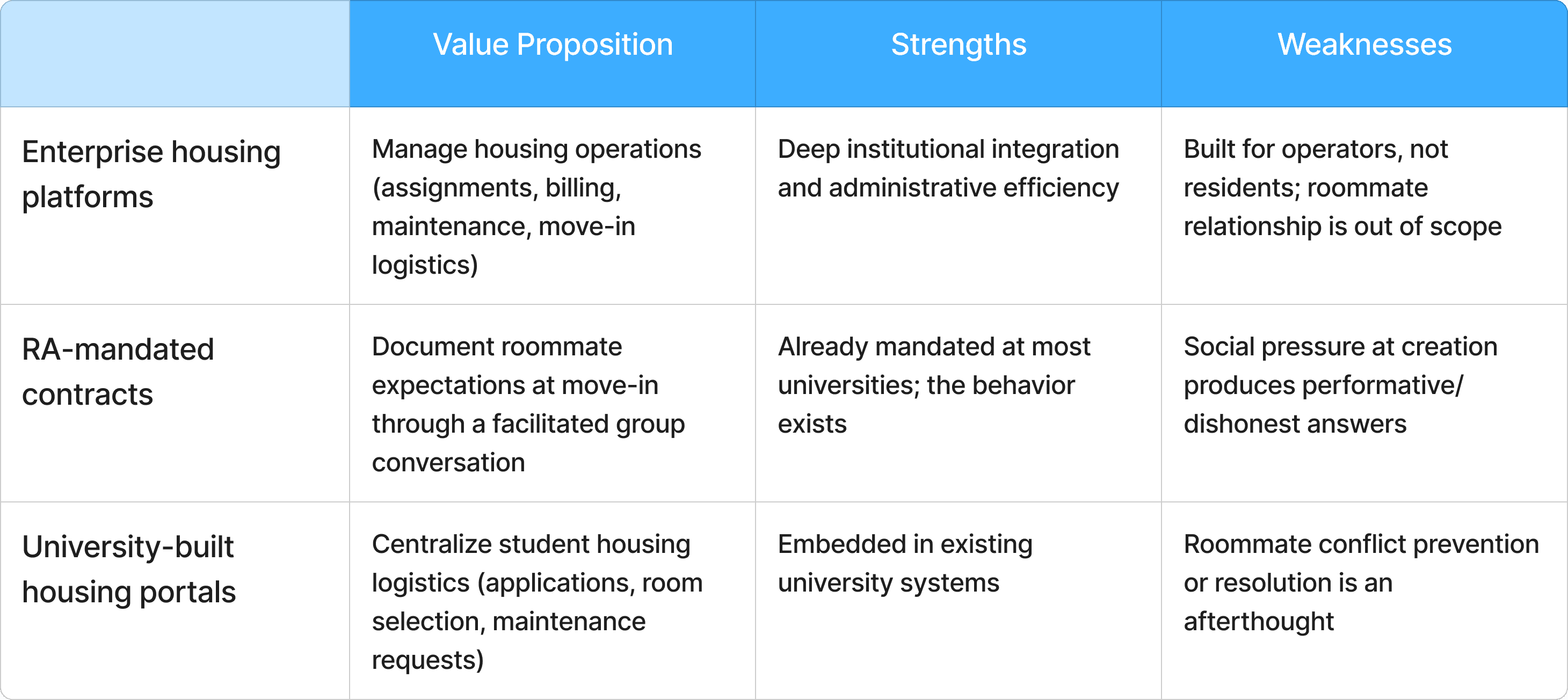
Existing solutions treat housing as a logistics problem, ignoring relationship factors.
Existing solutions manage beds, billing, and move-in logistics. None of them address what happens between roommates after the door closes.
USER PERSONA
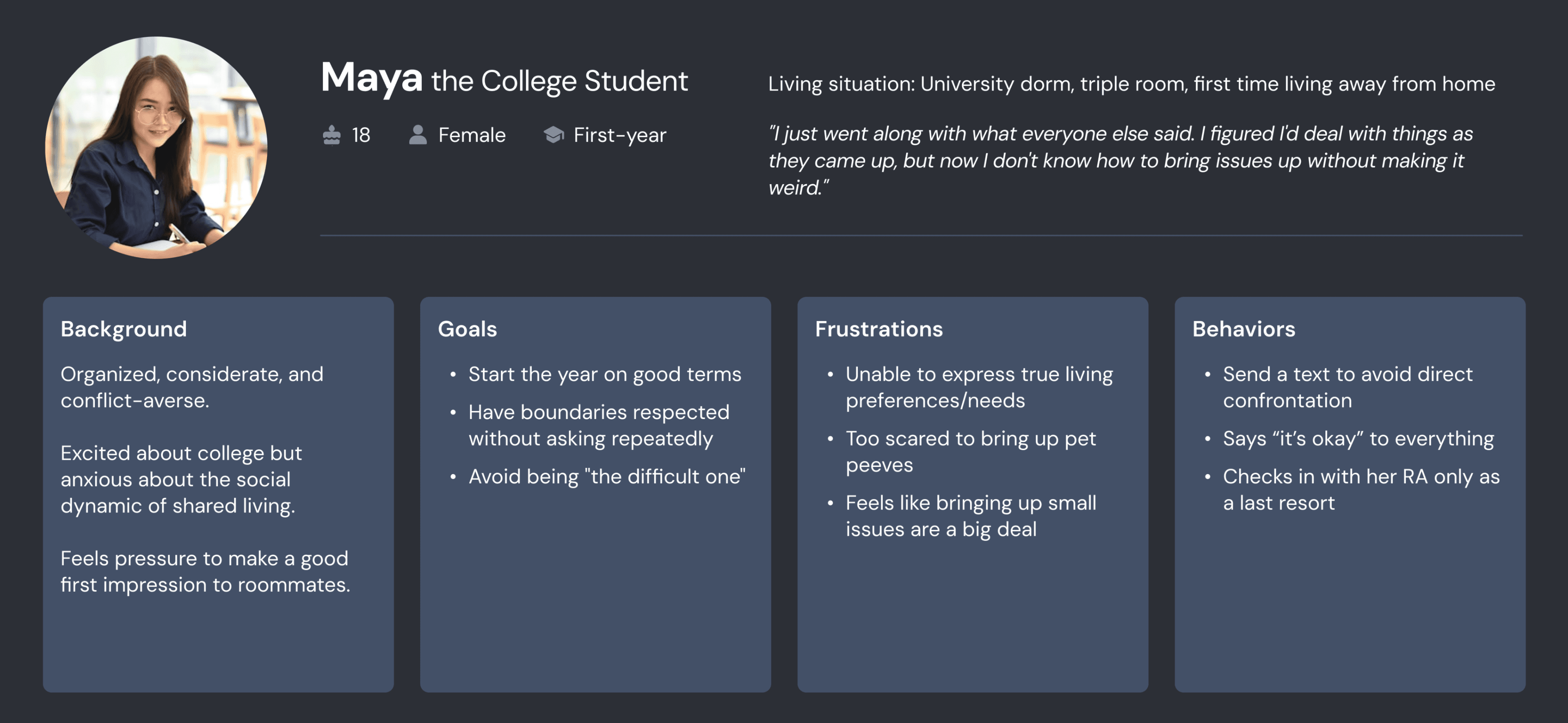
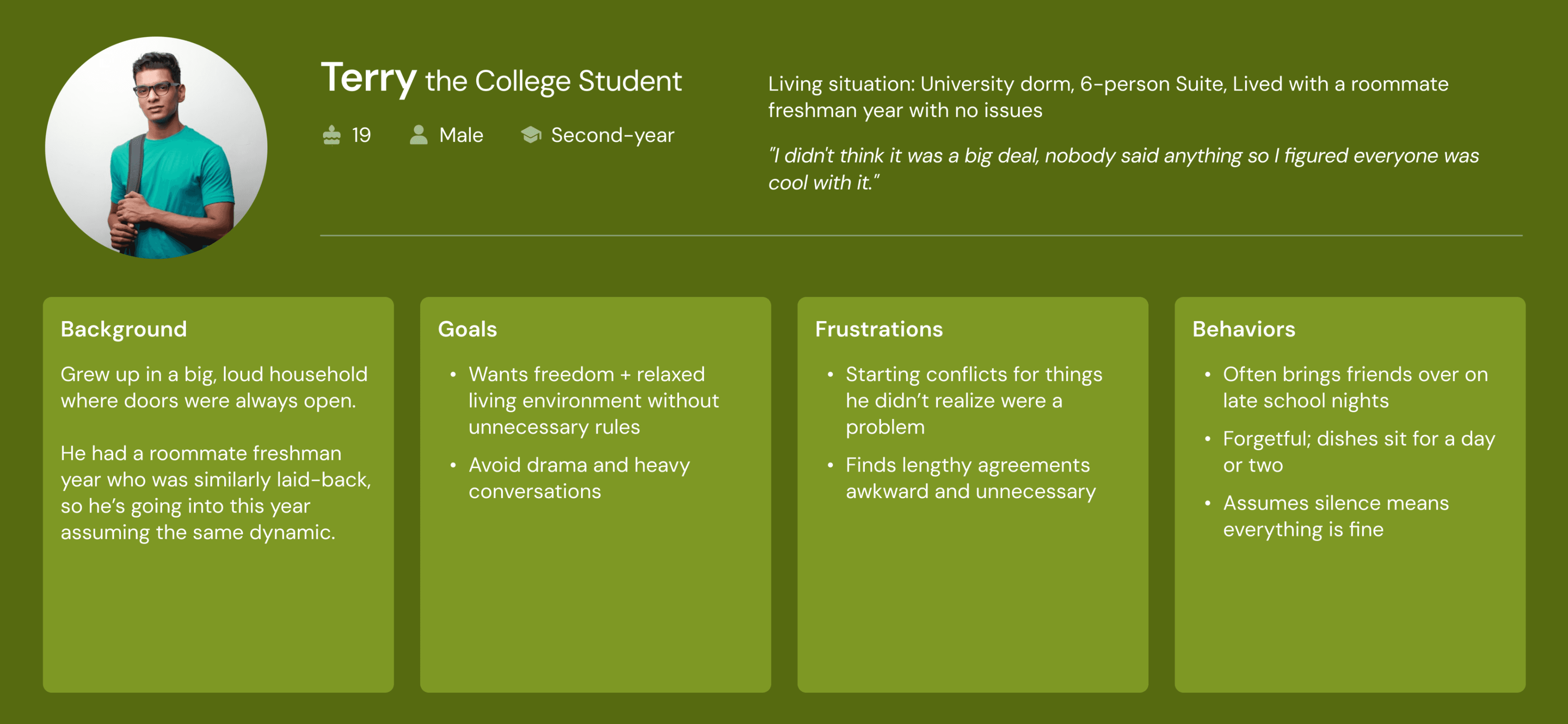
Meet your roommates: Maya & Terry
I developed two user personas to represent the range of students navigating shared living, from the conflict-averse to the unintentionally inconsiderate, and identify where the current LSA process fails them both.
PROBLEM STATEMENT
How might we help roommates honestly share and negotiate living preferences?
SOLUTION
Core Feature Snapshots
Full prototype link: https://kohabit-sigma.vercel.app/create-or-join
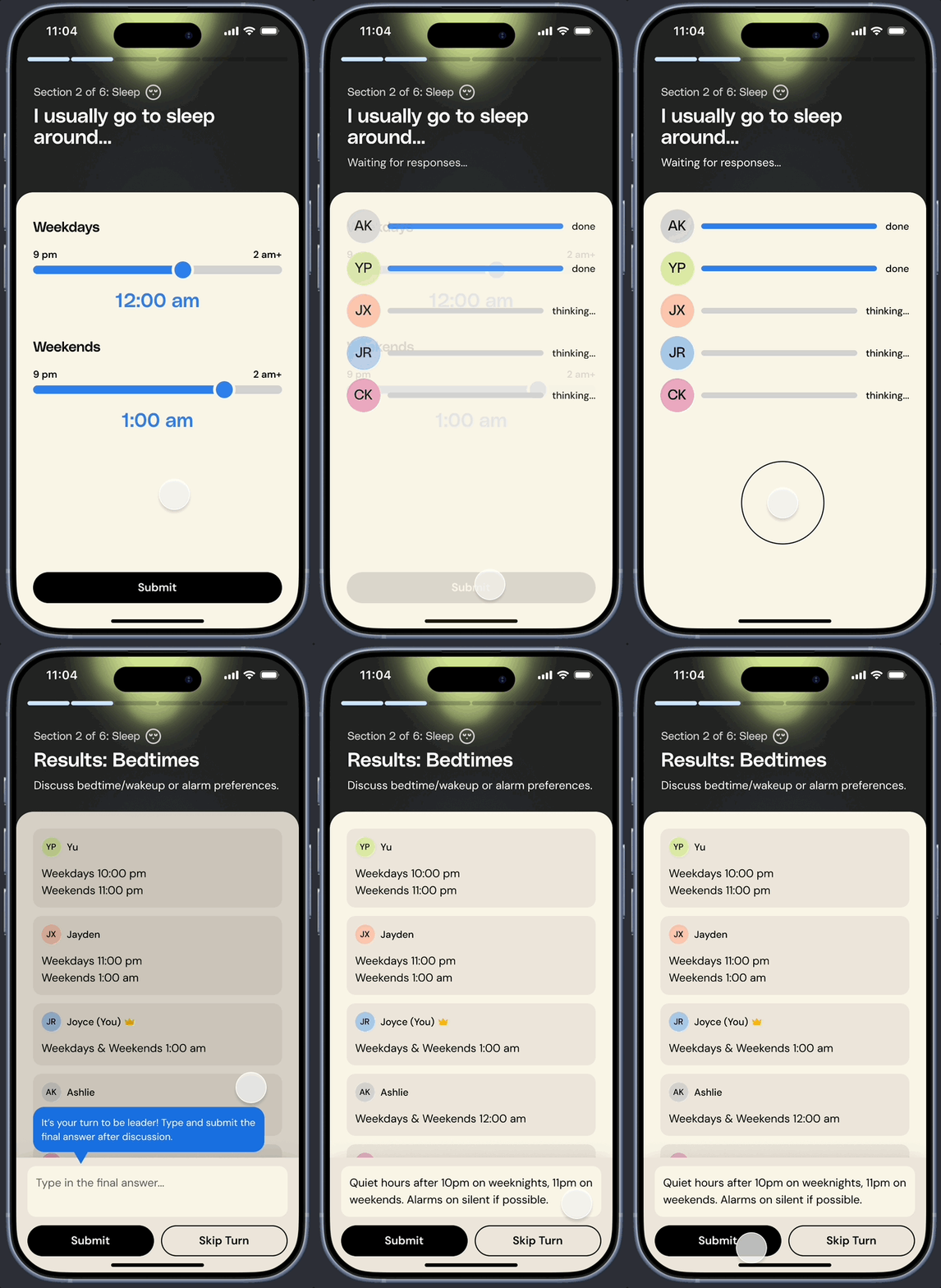
Pressured Conversations
Honest Dialogue
Everyone answers privately before anyone sees to mitigate social pressure.
When answers reveal simultaneously, disagreement becomes a natural conversation starter.
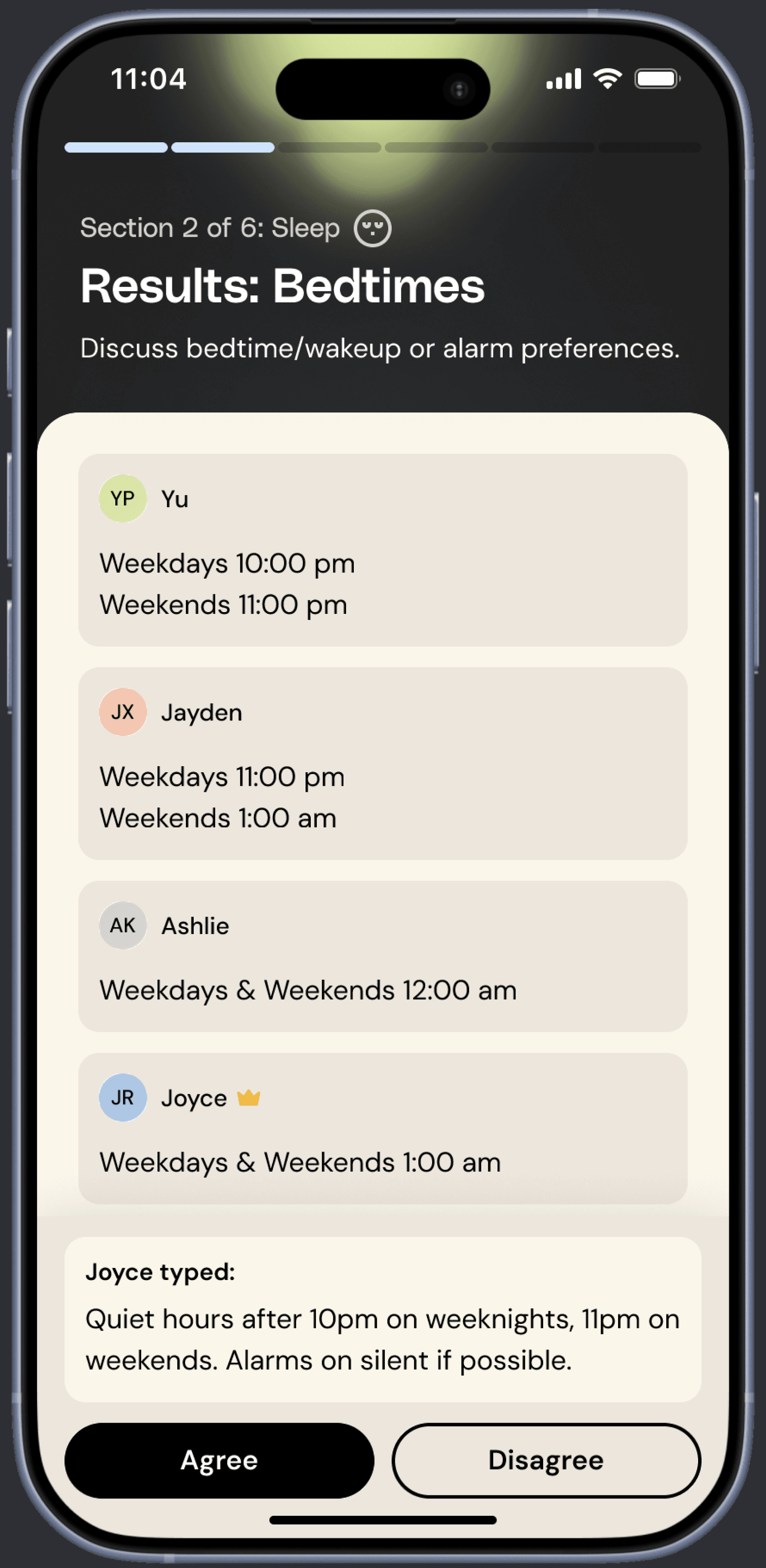
Static Living
Dynamic Agreements
Shared confirmed agreements actively confirmed by everyone.
Individual Preferences → Shared Commitment

Accumulated Tension
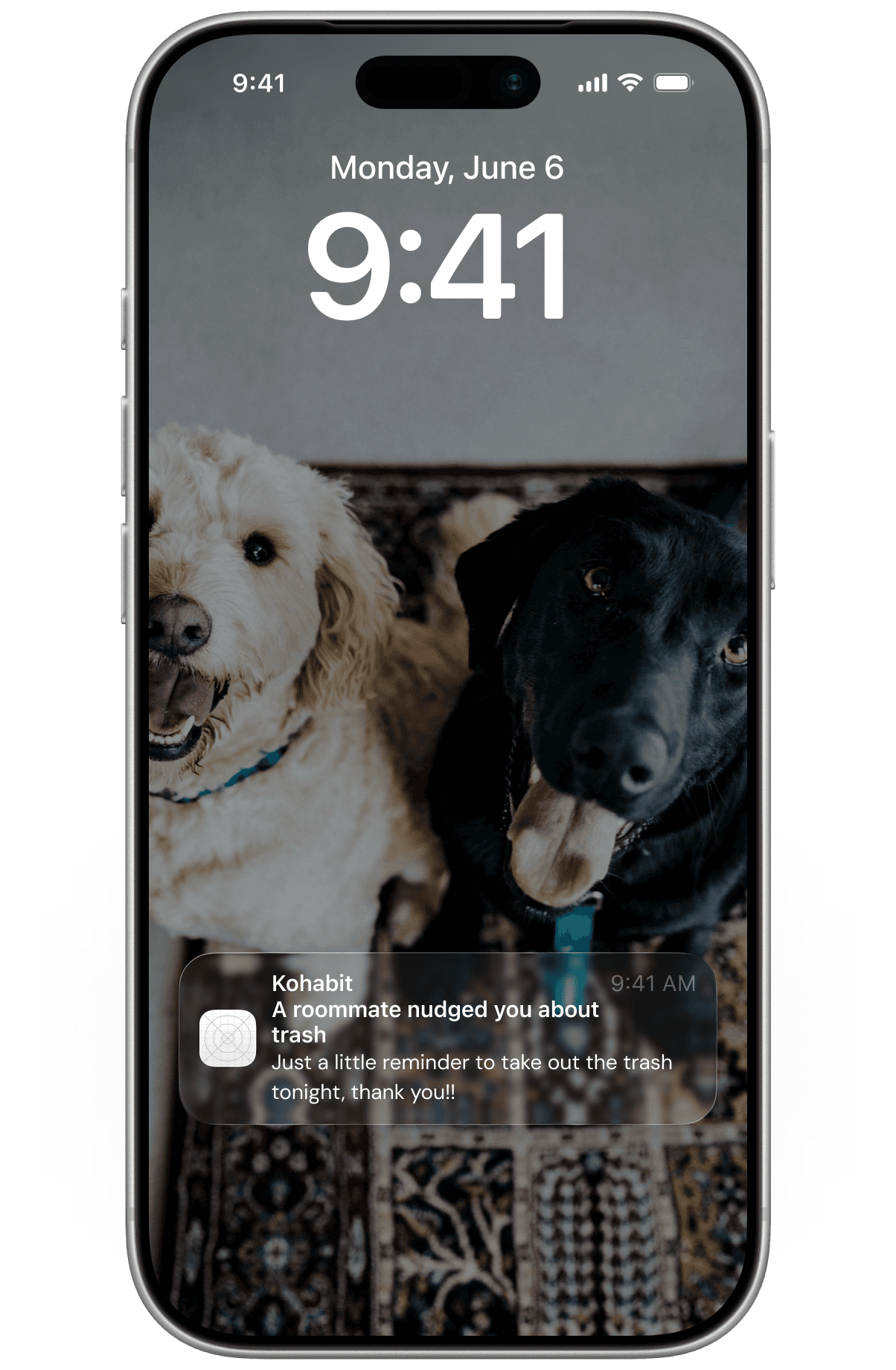
Low-pressure Nudges
Low‑pressure in‑app reminders handle chores, noise, and guest updates, so the group chat can stay social.

PRODUCT DEMO
Building a Functional Product Prototype for Usability Testing
We vibe coded a functional prototype using Cursor, TypeScript and JavaScript on the frontend, Supabase for the backend and database, and hosted on Vercel to get something real in users' hands for usability testing.
USABILITY TESTING
Design Iterations & Pivots
We conducted two rounds of usability testing with target user groups of college students living in university housing.
Instructional Clarity
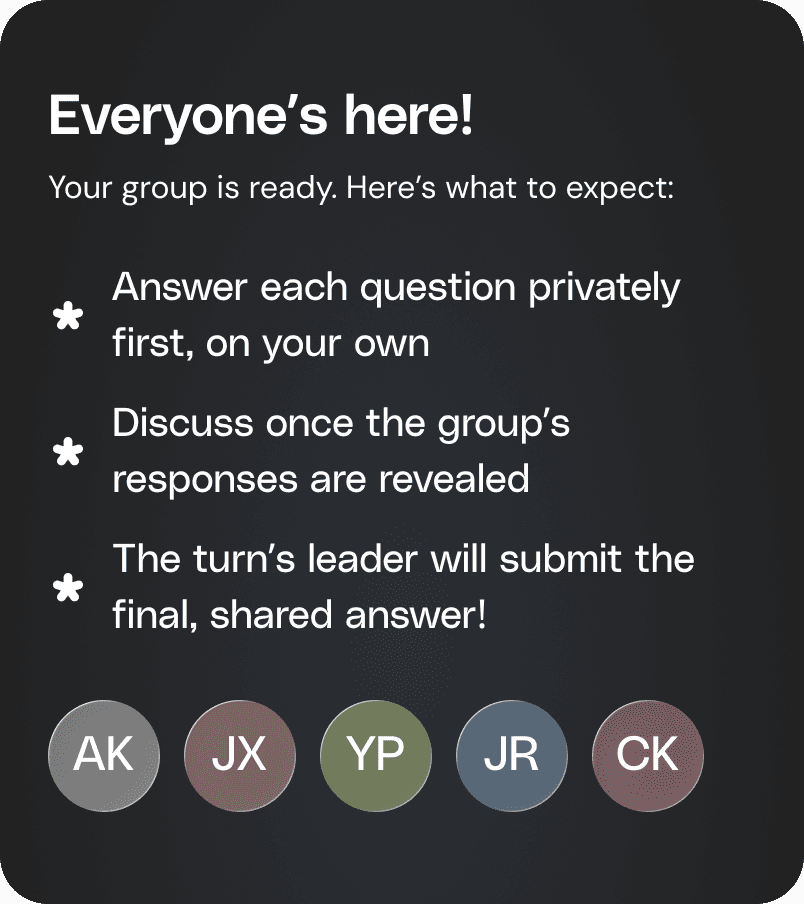
Some testers were unfamiliar to the LSA creation process and its purpose. Rule sets felt unexplained, causing user confusion
Solution: Added info slides and tool tips to handhold the UX and explain the purpose of the product
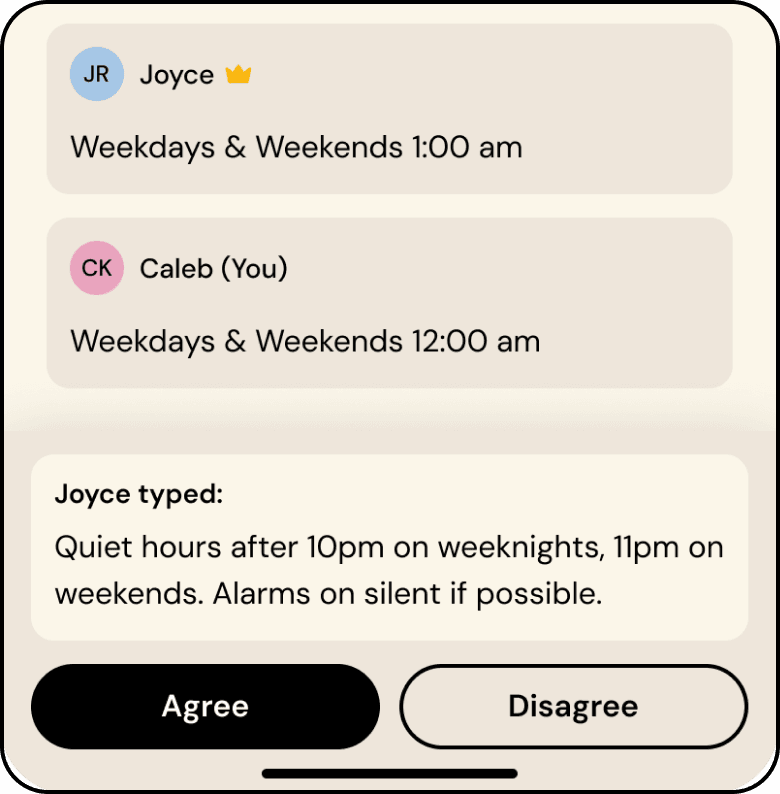
Discussion Facilitation
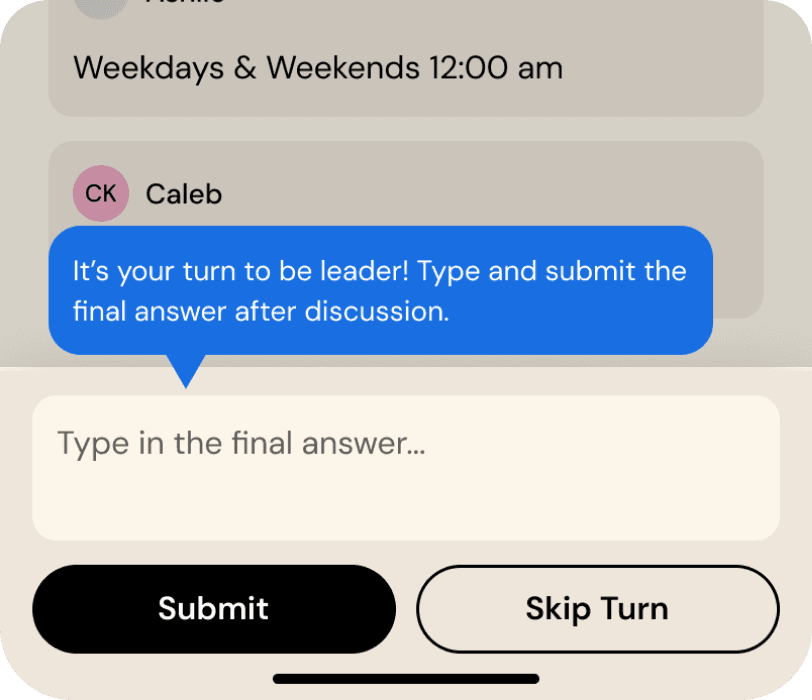
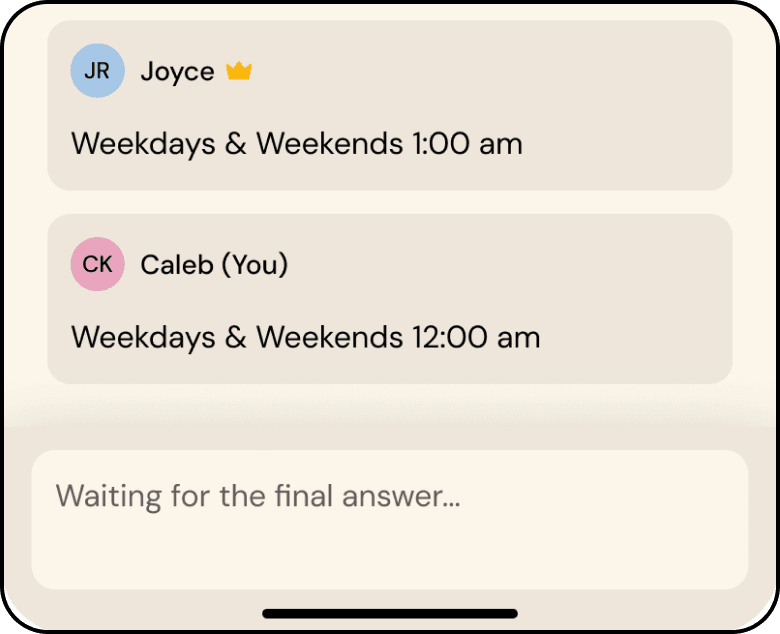
Initial flow of having one user submit all final answers as “group leader” felt confusing and not engaging group-wise.
Solution: Implemented rotational leading per question/turn for all-user engagement
NEXT STEPS
If I had more time…
Expand usability testing with a larger, diverse group of college students across different universities
Build out the planned check-in features into the functional prototype
Establish a pilot partnership with a university as proof of concept; validate the B2B model
REFLECTIONS
Input Format Matters
Anonymous answers changed how honestly people responded, showing that the mechanic is as important as the question.
Build to Test
Vibe coding a functional prototype surfaced usability issues a Figma prototype never would have caught.
Know Your Customer
B2B products often mean designing for the buyer and designing for the user are two different problems.